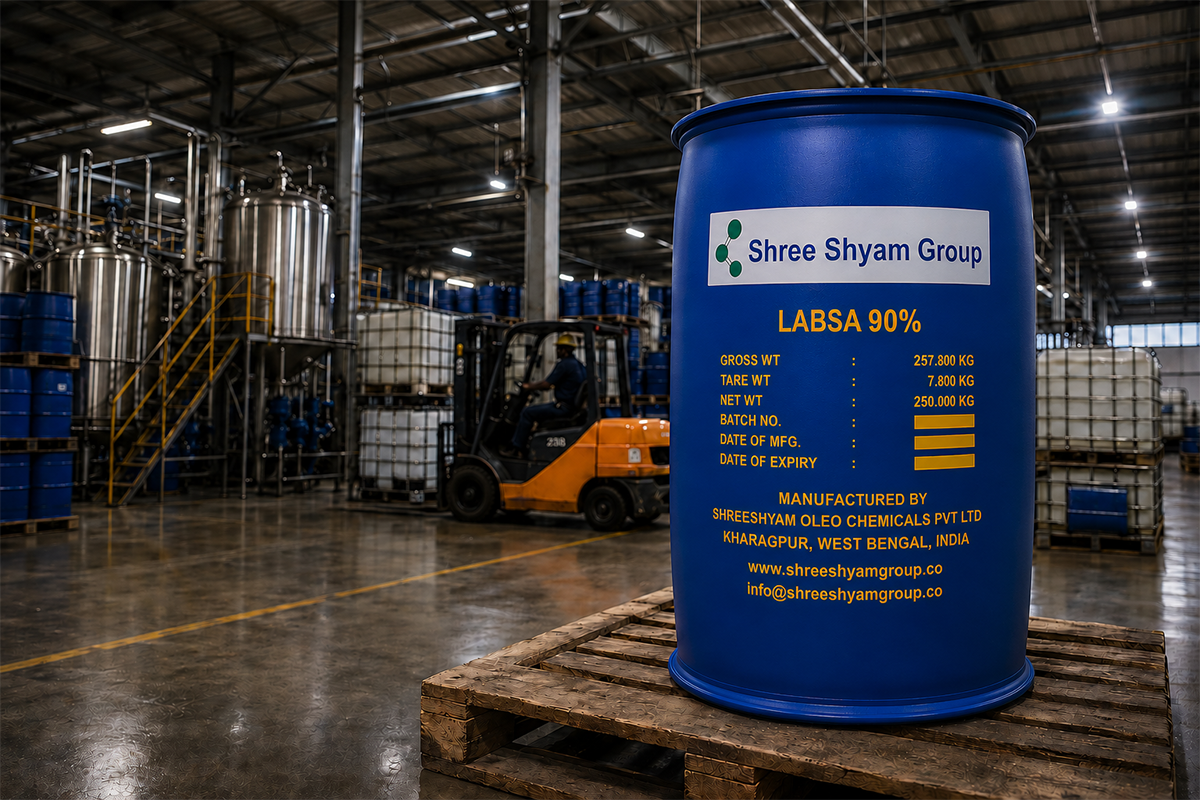
Industrial LABSA 90% or Linear Alkyl Benzene Sulfonic Acid, is a crucial chemical compound that plays a significant role in various industrial applications.
In this informative article, we delve deep into the world of Industrial LABSA 90%, providing a detailed overview of its properties, applications, production process, and more.
Let’s explore the many facets of this versatile chemical.
Industrial LABSA 90%,often referred to as sulfonic acid, is a high-demand chemical compound in the industrial sector. It serves as a key ingredient in the manufacturing of various detergents and cleaners. Its unique properties make it an indispensable component in many industrial processes.
Industrial LABSA 90%, often referred to as sulfonic acid, is a high-demand chemical compound in the industrial sector. It serves as a key ingredient in the manufacturing of various detergents and cleaners.
Industrial LABSA 90%, often referred to as sulfonic acid, is a high-demand chemical compound in the industrial sector.
It serves as a key ingredient in the manufacturing of various detergents and cleaners.
Its unique properties make it an indispensable component in many industrial processes.
One of the most prominent uses of Industrial LABSA 90% is in the production of liquid detergents and dishwashing soaps. Its excellent foaming properties and cleaning capabilities make it an ideal choice for formulating effective detergents.
In the textile industry, Industrial LABSA 90% is used as an emulsifier and wetting agent. It aids in the even distribution of dyes and chemicals during the dyeing process, resulting in vibrant and consistent colors.
Industrial LABSA 90% is employed in the formulation of agrochemicals, particularly herbicides and pesticides. Its surfactant properties enhance the efficacy of these agricultural chemicals.
In leather tanning, Industrial LABSA 90% helps in the removal of impurities and aids in achieving better dye penetration. This results in high-quality leather products.
The manufacturing of Industrial LABSA 90% involves a series of chemical reactions. It typically starts with the sulfonation of linear alkyl benzene (LAB), resulting in the formation of LABSA. The key steps in the production process include.
LAB is reacted with sulfuric acid to produce sulfonated LAB, which is then neutralized.
The sulfonated LAB is neutralized with alkalis, such as sodium hydroxide or sodium carbonate, to form Industrial LABSA.
Industrial LABSA is a cost-effective solution for various industrial applications.
Its versatility makes it a valuable ingredient in multiple industries.
Its superior cleaning properties make it a preferred choice in detergent manufacturing.
It is considered eco-friendly, with biodegradable properties.
Industrial LABSA maintains stability even under extreme conditions.
Industrial LABSA is not only versatile but also a sustainable choice for industries. Its biodegradable nature and minimal environmental impact make it an eco-friendly option. Moreover, its efficiency in various applications contributes to reduced resource consumption and waste production.
In conclusion, Industrial LABSA is a fundamental chemical compound that drives several industrial processes. Its versatility, cost-effectiveness,and eco-friendly nature make it a preferred choice across various industries. This article has provided you with a comprehensive understanding of Industrial LABSA, from its production process to its wide range of applications. It’s a chemical that not only cleans but also sustains, contributing to a cleaner and greener industrial future.